Key Takeaways:
- Every legal cannabis label must include five core data points: strain name, cannabinoid percentages, net weight, batch number, and lab testing status.
- THC percentage measures concentration by dry weight. Your tolerance, the consumption method, and the terpene profile all shape the character of the experience, not the THC number alone.
- A Certificate of Analysis (COA) is a third-party lab report that verifies potency, terpenes, pesticides, heavy metals, microbials, and residual solvents. All Story Cannabis products go through mandatory COA testing before reaching the shelf.
- Label requirements differ by state. Ohio, Arizona, and Maryland each have their own rules around symbols, QR codes, serving size disclosures, and packaging restrictions.
- Shopping by terpene profile rather than THC percentage alone gives you a more consistent, predictable experience. Myrcene and linalool are common in indica-leaning products; limonene and pinene are common in sativa-leaning ones.
Table of Contents
Most shoppers who visit Story Cannabis go straight to the THC percentage. It is the most visible number on any package, and it feels like the most useful one. In practice, though, the label tells you far more than potency, and the rest of that information often matters just as much.
This guide covers everything on a legal cannabis label: what each element means, how to read it, what to watch for, and how to use the full label to choose a product that actually fits what you are looking for. Whether you are shopping at a Story Cannabis location in Ohio, Arizona, or Maryland, these skills apply at every dispensary in every state.
What Information Is Required on a Legal Cannabis Label?
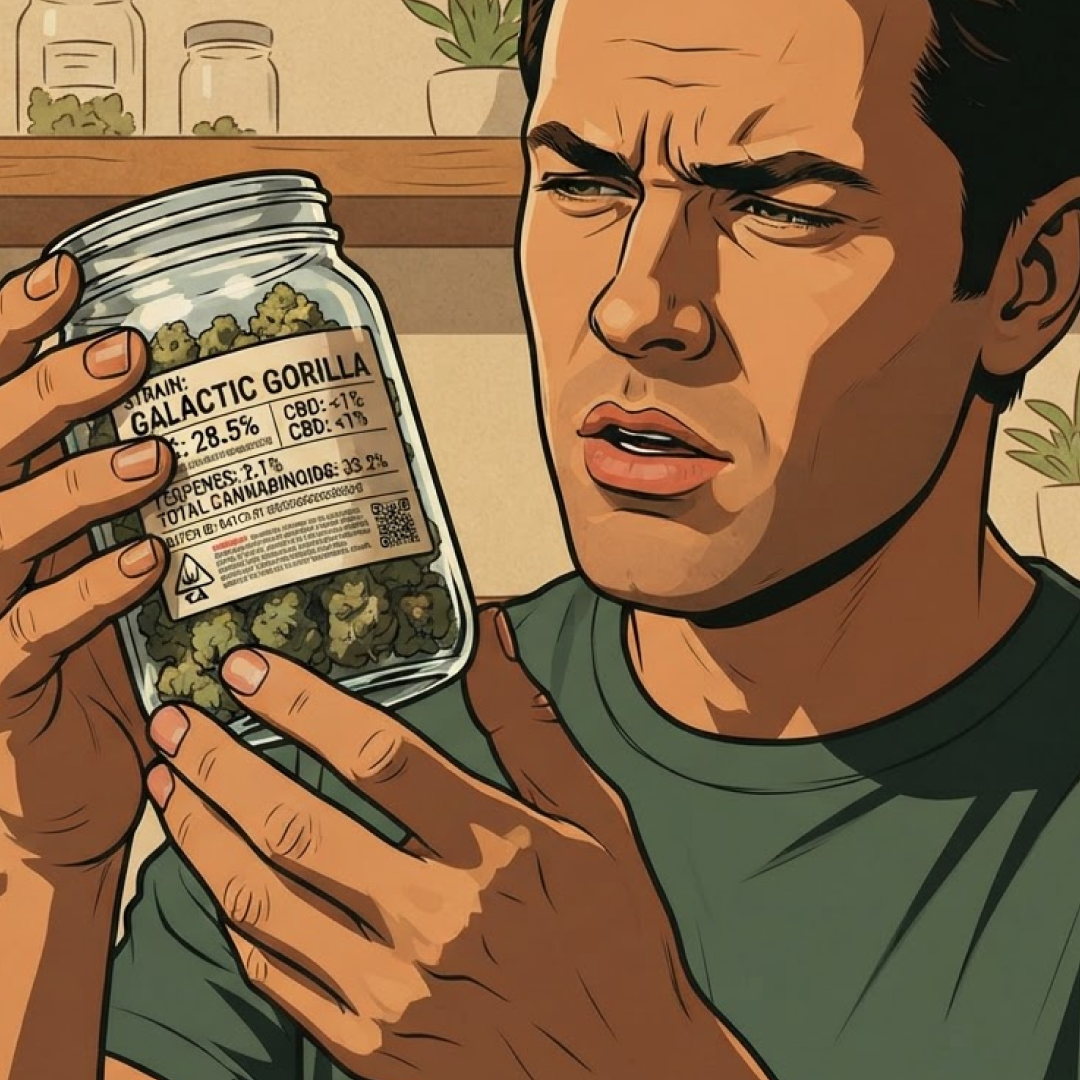
Every legal cannabis product must display five core data points: strain name, cannabinoid percentages, net weight, batch number, and lab testing status.
These five elements are the floor, not the ceiling. Brands typically add terpene listings, harvest dates, and QR codes to lab results voluntarily. That extra information is not legally required in every state, but when it is present it is worth paying attention to.
The batch or lot number is the most underappreciated item on the label. It provides traceability, and it is the key to matching a specific product to its Certificate of Analysis (COA). If you want to verify exactly what is in the package you are holding, the batch number is what connects the label to the lab report.
What Does the THC Percentage Actually Mean?
THC percentage measures concentration by dry weight. A higher number does not automatically mean a stronger or better experience. Your tolerance, the consumption method, and the terpene profile all shape the outcome.
A product at 28% THC and a product at 22% THC can produce very different experiences depending on the terpene profile, the format (flower versus edible versus concentrate), and the individual consuming it. THC percentage is a useful data point, but it is one signal among several.
The ‘entourage effect’ concept, explored in peer-reviewed research published on PubMed, suggests that cannabinoids, terpenes, and flavonoids work together. The interaction between these compounds shapes the overall character of the experience.
A practical starting point based on experience level:
- Beginners: Start low. For flower, no more than 0.5g at a time. For edibles, 2.5mg to 5mg per dose. Give each session time to settle before adjusting.
- Intermediate consumers: 1g of flower or 5mg to 10mg of edibles is a reasonable range. Pay attention to how different terpene profiles affect you at this level.
- Experienced consumers: Tolerance builds over time. Experienced consumers can typically handle 1g or more of flower and 10mg or more of edibles, though this varies significantly by individual and consumption method.
The most important rule at any experience level: when you encounter a new product or a new format, treat it as a first time regardless of your tolerance history.
What Is CBD and Why Does the THC-to-CBD Ratio Matter?
Cannabidiol (CBD) is a non-intoxicating cannabinoid. The ratio on the label tells you the proportion of CBD to THC, which directly affects the overall character of the product.
A 1:1 ratio means equal parts CBD and THC. A 20:1 ratio means high CBD with very low psychoactive THC. On any label, the first number refers to CBD and the second to THC. That order matters: a product listed as 1:20 is the opposite of 20:1, and getting it wrong can lead to an unexpectedly intense experience.
CBD does not cancel out THC, but research suggests it can modulate certain aspects of the THC experience. CBD-forward ratios are a common starting point for newer consumers or those who prefer a more balanced product.
When to Consider a Higher CBD Ratio
A higher CBD ratio (20:1 or similar) is a common starting point for consumers new to cannabis or those who prefer a less psychoactive product.
Beyond CBD, some labels also list minor cannabinoids worth knowing:
- CBN (Cannabinol): A minor cannabinoid found in some evening-use products and CBN-specific edibles. Non-intoxicating at typical concentrations.
- CBG (Cannabigerol): A non-intoxicating minor cannabinoid found in some flower and tincture products. Listed on labels as a voluntary disclosure.
- THCV (Tetrahydrocannabivarin): A minor cannabinoid found in some sativa-leaning products. Present at low concentrations in most cannabis.
The presence of these cannabinoids on a label is voluntary disclosure, not a legal requirement. When they are listed, they give you a more complete picture of the product’s cannabinoid composition.
What Are Terpenes and Should You Pay Attention to Them?
Terpenes are aromatic compounds responsible for each strain’s distinctive smell and flavor. For a deeper look at how terpenes work, see Story Cannabis’s comprehensive terpene guide.
Shopping by terpene profile, rather than by THC percentage alone, gives you a more consistent and predictable experience session to session.
The reason is straightforward: two products at the same THC percentage but with different dominant terpenes will feel noticeably different. A myrcene-dominant 24% THC flower and a limonene-dominant 24% THC flower have different aromatic characters and different overall profiles, even if the number on the jar matches.
The Five Most Common Terpenes on Cannabis Labels
- Myrcene: Earthy, musky aroma. The most common cannabis terpene. High concentrations (0.5%+) are characteristic of indica-leaning strains.
- Limonene: Bright citrus aroma. Commonly found in sativa-leaning strains. One of the most recognizable terpenes by scent.
- Caryophyllene: Spicy, peppery, woody aroma. Found in black pepper and cloves. Uniquely, caryophyllene binds to CB2 receptors in the body, meaning it behaves somewhat like a non-intoxicating cannabinoid.
- Linalool: Floral, lavender-adjacent aroma. Common in indica-leaning strains. Frequently found in products marketed for evening use.
- Pinene: Pine and sage aroma. One of the most recognizable terpenes in sativa-leaning strains.
Terpene Quick Reference Chart
Terpene | Aroma | Character / Lean | Common Strains |
Myrcene | Earthy, musky | Indica-leaning (dominant in many indicas) | OG Kush, Blue Dream, Granddaddy Purple |
Limonene | Citrus, lemon | Sativa-leaning (bright, citrus-forward strains) | Super Lemon Haze, Durban Poison, Sour Diesel |
Caryophyllene | Spicy, peppery, woody | Balanced; binds CB2 receptors | Girl Scout Cookies, Gelato, Chemdog |
Linalool | Floral, lavender | Indica-leaning (common in evening products) | Lavender, Do-Si-Dos, Amnesia Haze |
Pinene | Pine, sage, fresh | Sativa-leaning (common in classic sativa strains) | Jack Herer, Blue Dream, Pineapple Express |
When a product label lists terpene percentages, look at the dominant terpene (the highest percentage) first. That single terpene is typically the strongest indicator of a product’s aromatic character and classification lean.
What Is a Certificate of Analysis (COA) and How Do You Use It?
A COA is a third-party lab report that verifies what is actually inside the package. It is the most complete document in cannabis retail and the most underused by consumers.
All Story Cannabis products go through mandatory third-party COA testing before they reach the shelf. Every product you purchase has a corresponding lab report confirming its potency, terpene profile, and safety panel. Reviewing that report gives you more information than the label alone.
A full COA tests for:
- Potency: cannabinoid percentages including THC, CBD, and minor cannabinoids
- Terpenes: the full terpene profile with percentages
- Pesticides: confirms no prohibited pesticide residues
- Heavy metals: screens for lead, arsenic, cadmium, and mercury
- Microbials: tests for harmful bacteria, mold, and yeast
- Residual solvents: relevant for concentrates, confirms solvent purge was complete
To find the COA for any product: scan the QR code on the package, check the brand’s website, or ask your Story Cannabis budtender.
When reading a COA, check these two things first: the test date (more recent is better for terpene accuracy), and the batch number. The batch number on the COA must match the batch number on the label. If they do not match, you are looking at a report for a different lot.
Each state’s regulatory body sets and enforces testing standards for cannabis products. For state-specific testing requirements, visit:
Arizona Department of Health Services
How Do Cannabis Labels Differ Depending on Which State You Are In?
Each state writes its own labeling rules. Even when the product inside is identical, labels in Ohio, Arizona, and Maryland can look meaningfully different.
Ohio (Division of Cannabis Control)
Ohio requires its own universal cannabis symbol on all dispensary packages, plus a tamper-evident indicator that makes it visually clear if the package has been opened. Edibles must list serving size and total servings. Adult-use products must state: ‘For use only by adults 21+.’ Medical products must note they are for adults 18+ or those with a caregiver. Ohio uses the Metrc seed-to-sale tracking system statewide.
Arizona (Department of Health Services)
Arizona requires the state-approved universal cannabis symbol and a mandated warning statement in at least 6-point font. Medical marijuana products must include patient and caregiver information fields. Most products require a QR code linking directly to lab results, which makes Arizona one of the easiest states for consumers to pull up a COA on the spot. Weight must be listed in both imperial and metric units.
Maryland (Maryland Cannabis Administration)
Maryland requires a universal symbol, an MCA-approved warning statement, and the dispensary or manufacturer license number. Edibles must list THC and CBD amounts in milligrams per serving, not just as percentages. Maryland also enforces strict packaging rules around visual appeal: neon colors, bright patterns, and playful or cartoon-style designs are prohibited to prevent products from appearing attractive to minors. Certain product types must also state: ‘Not for resale.’
State-by-State Label Requirements
Requirement | Ohio | Arizona | Maryland |
Universal symbol | Yes | Yes | Yes |
QR code to lab results | No | Yes | No |
Per-serving MG on edibles | No | No | Yes |
Child-resistant packaging | Yes | Yes | Yes |
License number on package | No | Yes | No |
Minor-appeal restrictions | No | No | Yes |
Beyond cannabinoid percentages, cannabis labels carry several other pieces of information worth checking before you buy, particularly for edibles and inhalable products.
For edibles, always cross-reference the net weight with the serving size. A 100mg package that contains 10 servings is a very different product than a 100mg package with 20 servings, even though the total milligrams are the same. The per-serving dose is what matters for controlling your experience.
For flower and vapes, the harvest date or production date is worth checking. Terpenes are volatile compounds and degrade over time. A flower harvested six months ago will not smell or taste as vivid as a fresh batch, and the aromatic profile can shift as terpenes diminish. Freshness matters most if you are shopping by terpene profile.
Universal warning symbols and compliance language are legally required and confirm the product was produced and tested through a licensed, regulated supply chain. Their presence is a baseline indicator of legitimacy; their absence on any cannabis product should be a red flag.
How Do You Use a Label to Choose the Right Product for You?
Reading a cannabis label well is a three-step process. Start with your goal, cross-reference the terpenes, then factor in the THC percentage for your experience level.
- Identify your goal: What kind of experience are you looking for? The answer to that question determines which terpenes you should prioritize.
- Check the terpene profile: Myrcene and linalool are most common in indica-leaning, evening-use products. Limonene and pinene are most common in sativa-leaning products. Caryophyllene is found across both categories. Look at the dominant terpene first.
- Factor in THC percentage and format: Match the concentration to your tolerance. Edibles take longer to take effect but last longer. Flower and vapes are faster and easier to dose incrementally. A lower THC product with the right terpene profile often produces a better experience than the highest number on the shelf.
If you are unsure where to start, ask your Story Cannabis budtender. You can also browse our guide to ordering cannabis online if you prefer to shop ahead of your visit.
Ohio Note: All cannabis products at Story Cannabis Ohio locations are licensed and compliant with Ohio Division of Cannabis Control (DCC) regulations. No medical claims are made here. Consult a healthcare provider for medical guidance.
Frequently Asked Questions
What does THC percentage mean on a cannabis label?
THC percentage measures the concentration of tetrahydrocannabinol by dry weight. A product at 25% THC means 25% of the dry weight is THC. It is a useful signal of potency but not a complete predictor of the experience. Your individual tolerance, the consumption method, and the terpene profile all shape what you actually encounter. Two products at the same THC percentage can feel quite different depending on those variables.
How do I find the lab test results for a cannabis product?
Scan the QR code on the package, check the brand’s website, or ask your Story Cannabis budtender directly. All Story Cannabis products go through mandatory third-party COA testing, so a lab report is always available. When reviewing a COA, confirm the batch number on the report matches the batch number printed on the label before drawing any conclusions from the data.
What is the difference between THC and CBD on a label?
THC (tetrahydrocannabinol) is the primary psychoactive compound in cannabis. CBD (cannabidiol) is non-intoxicating. The ratio between them, expressed on the label as CBD:THC, tells you the proportion of each. A 1:1 product is balanced. A 20:1 product is high CBD with minimal psychoactivity. A 1:20 product is THC-dominant.
Do cannabis labels look the same in Ohio, Arizona, and Maryland?
No. Each state controls its own labeling requirements. Arizona requires a QR code linking to lab results on most products. Maryland requires THC and CBD listed in milligrams for edibles and prohibits packaging that could appeal to minors. Ohio requires a tamper-evident indicator and the state’s universal cannabis symbol. The product inside may be identical across states; the label will not be.
What terpenes should a beginner look for on a cannabis label?
Beginners often do well starting with caryophyllene-dominant products. Caryophyllene has a spicy, peppery aroma and a distinct profile: it binds to CB2 receptors, meaning it behaves differently from most terpenes. From there, you can explore limonene for a more citrus-forward and sativa-leaning character, or myrcene for a more indica-leaning, earthy profile. For a full breakdown of how terpenes work, see Story Cannabis’s comprehensive terpene guide.