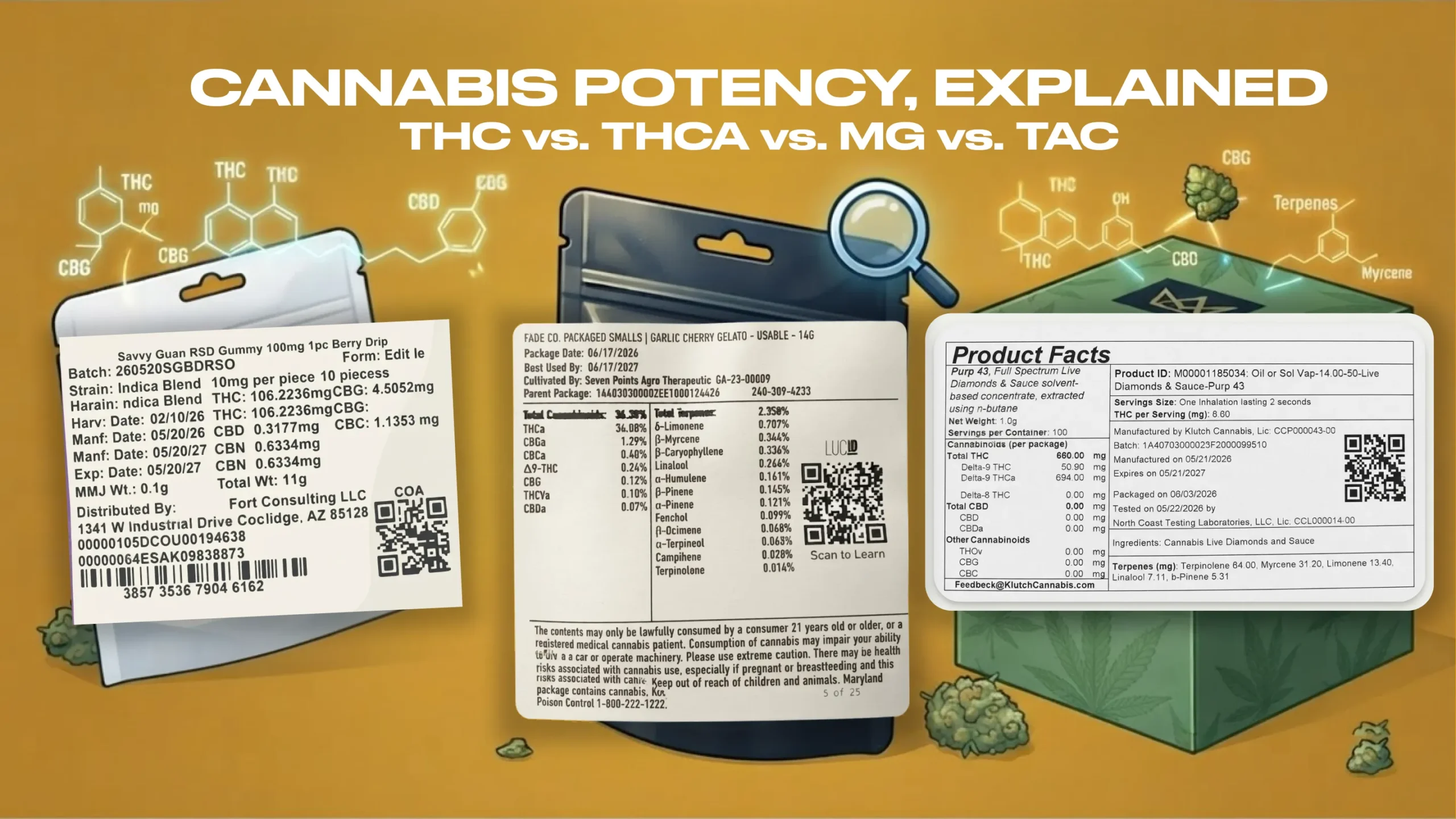
Every cannabis product on a dispensary shelf comes with a potency label to help you understand what’s inside. One product lists a THC percentage, while another shows total cannabinoids. A third reports milligrams per serving.
Those three numbers can be confusing, and they aren’t all measuring the same thing.
This guide explains what each potency number actually means. It also shows why total cannabinoids are higher than THC and where CBD fits in. By the end, you’ll know how to read a label before you buy. No chemistry degree required.
Table of Contents
Key Takeaways
- The THC percentage on a label measures THC by weight, while total cannabinoids (TAC) counts every active cannabinoid in the product. That’s why TAC is almost always the higher number.
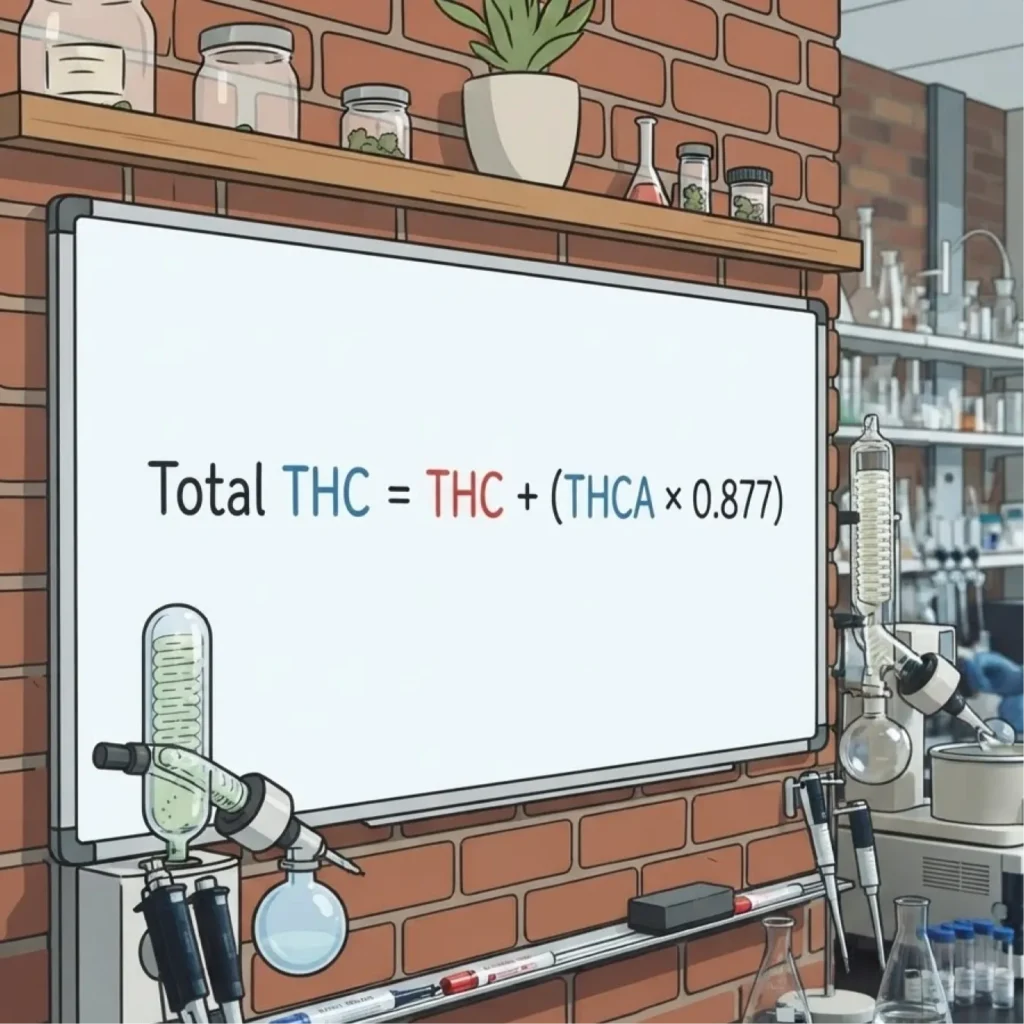
- Most labels report Total THC, which combines active THC with THCA. It uses the formula THC plus THCA multiplied by 0.877, since THCA converts to THC when heated.
- CBD is counted in total cannabinoids but is non-intoxicating. A higher CBD reading adds to the total without making the product more intoxicating.
- A higher THC percentage doesn’t automatically mean a better or stronger product. Terpenes and other cannabinoids also factor into the overall profile.
- Potency is listed as a percentage by weight for flower, pre-rolls, concentrates, and vapes. Edibles and drinks list potency in milligrams per serving.
- All potency figures on Story Cannabis products come from state-licensed lab testing. Additionally, every product is sold to adults 21 and older.
What Does the THC Percentage on a Label Mean?
The THC percentage tells you how much THC a product contains by weight. On flower, a 20 percent label means roughly 200 milligrams of THC per gram.
THC, or tetrahydrocannabinol, is the main compound responsible for the intoxicating effects of cannabis. For flower and pre-rolls, THC levels usually range from 15 to 30 percent. Concentrates run much higher, often between 60 and 90 percent, because most of the plant material has been removed.
The fact that not all of the THC listed on a cannabis label is active yet often trips people up. Most of it starts as THCA, a compound that converts to THC when heated.
Note: This guide is educational and makes no medical claims. Cannabis is for adults 21 and older where legal, and all potency figures on Story Cannabis products come from state-licensed laboratory testing. |
Why THCA Makes the Math Confusing
Raw cannabis contains mostly THCA, the non-intoxicating form of THC found in unheated cannabis. When you light a joint or use a vape, heat converts THCA into active THC through a process called decarboxylation.
Because of this, Total THC is calculated using a standard formula and reported on the label.
How Total THC Is Calculated
Total THC = THC + (THCA × 0.877)
The 0.877 factor exists because THCA is a heavier molecule than THC. It sheds weight during conversion.
So, a flower showing 1 percent THC and 20 percent THCA has a Total THC of about 18.5 percent, not 21 percent.
What Are Total Cannabinoids (TAC)?
Total cannabinoids, often shown as TAC on a cannabis label, represent the combined amount of all detectable cannabinoids in a product. That includes THC, CBD, CBG, CBN, CBC, and other cannabinoids identified during lab testing.
Because TAC counts every cannabinoid while Total THC counts only THC, the TAC number is almost always higher. For example, a product with 18.5 percent Total THC might show 22 percent TAC once CBD and other minor cannabinoids are included.
TAC is useful because it reflects the product’s overall cannabinoid profile, not just its THC content.
THC vs. Total THC vs. TAC at a Glance
Cannabis labels often display all three measurements, but each one tells you something different. Use this chart as a quick reference when comparing products:
Measurement | What It Counts | Usually | What It Tells You |
|---|---|---|---|
THC % | Active THC by weight | Lower | Potency from THC that is already active |
Total THC | Active THC plus converted THCA | Middle | Realistic THC once the product is heated |
Total Cannabinoids | Every cannabinoid combined | Highest | The product’s overall cannabinoid profile. |
Is CBD Part of Total Cannabinoids?
Yes. CBD is one of the cannabinoids counted in total cannabinoids, but because it is non-intoxicating, a higher CBD reading does not make a product more intoxicating.
CBD Counts Toward Total Cannabinoids
CBD, or cannabidiol, is the second most abundant cannabinoid in cannabis after THC. It contributes to the total cannabinoid count along with THC, CBG, CBN, CBC, and other cannabinoids identified during lab testing. When a product’s TAC runs well above its Total THC, CBD is often a big reason why, along with minor cannabinoids like CBG and CBN.
CBD Doesn’t Increase THC Potency
Because CBD is non-intoxicating, it does not make a product more intoxicating the way THC does. A product can contain a meaningful amount of CBD without increasing its THC potency. That is why many consumers compare the THC-to-CBD ratio alongside potency numbers when evaluating products.
Why the THC-to-CBD Ratio Matters
Some researchers describe the interaction between cannabinoids and terpenes as the entourage effect, a theory that cannabinoids and terpenes may interact with one another. While research is still ongoing, many consumers compare THC-to-CBD ratios when choosing products because different cannabinoid combinations have different compositions. That’s also why a balanced one-to-one THC-to-CBD product has a different cannabinoid profile than a THC-dominant one, even when the THC percentage is the same.
Does a Higher THC Percentage Mean a Stronger Product?
Not necessarily. THC percentage is only part of the picture, and the highest number on the shelf is not always the best choice.
It is easy to shop by THC percentage alone, but potency is not the whole story. Two products with the same THC percentage can have very different terpene content and cannabinoid balance.
For anyone newer to cannabis, the highest THC percentage on the shelf is not always the right starting point. Many consumers choose a moderate THC percentage rather than the highest available, especially when they’re new to cannabis. If you are just starting out, our first-time buyer’s guide is a good place to begin.
How Potency Is Measured Across Product Types
Flower, pre-rolls, concentrates, and vapes are measured as a percentage by weight. Edibles and drinks are measured in milligrams per serving.
To put it in simpler terms, potency is not reported the same way for every product. For anything you smoke or vape, the label uses a percentage. For anything you eat or drink, it uses milligrams, because a percentage of a gummy’s weight would not tell you much.
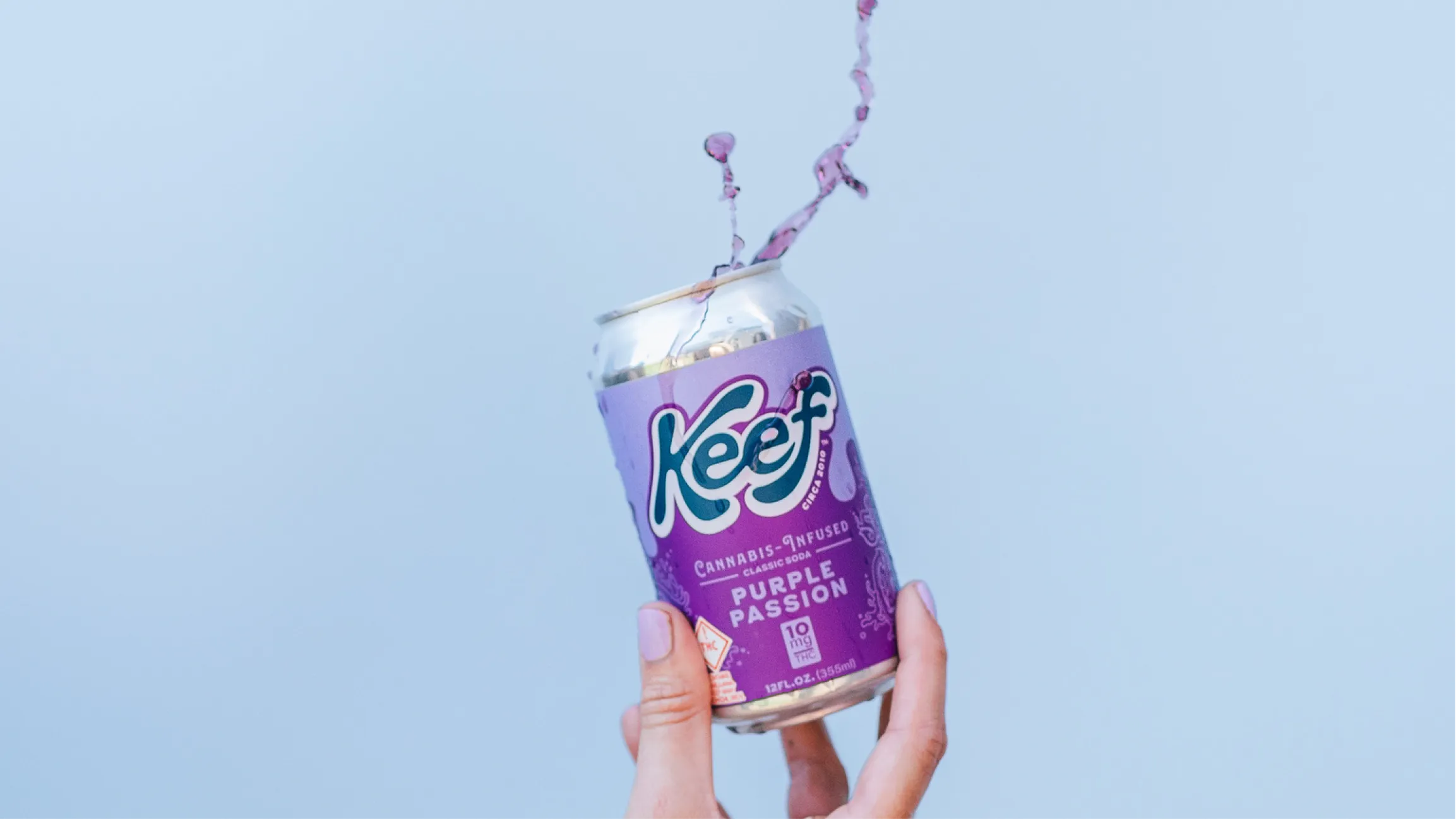
A gummy might list 10 milligrams of THC per piece and 100 milligrams per package. A beverage might list 5 milligrams per can. For edibles and drinks, those milligram figures are the ones that matter.
The table below shows how potency is listed across the most common cannabis product types. It also highlights the typical THC ranges you’ll see on each type of label:
Product Type | How Potency Is Listed | Typical Range |
|---|---|---|
Flower and Pre-Rolls | Percentage by weight | 15 to 30% THC |
Concentrates | Percentage by weight | 60 to 90% THC |
Vape Cartridges | Percentage by weight | 70 to 90% THC |
Edibles and Drinks | Milligrams per serving | 2.5 to 10mg THC per serving |
How Do You Read a Potency Label?
Look for Total THC first, check TAC for the full profile, and for edibles read the milligrams per serving, not per package.
Start with Total THC, since that is the realistic measure of THC potency after the product is heated. If the label also shows TAC, that tells you how much cannabinoid content the product carries beyond THC alone, including CBD and the minor cannabinoids.
For edibles and drinks, focus on milligrams per serving rather than per package, so you know how much is in a single dose. If a terpene profile is listed, it can hint at the aroma and character you can expect.
What to Ask a Budtender About Potency
Ask about the Total THC, TAC, whether a product matches your tolerance, and what the terpene profile is like.
Budtenders read these labels all day. If the numbers are unclear, tell them about your experience level so they can help you compare products with different potency levels.
It also helps to ask about CBD content and terpenes, since two products with the same THC percentage can have very different cannabinoid and terpene profiles.
Ready to find your perfect potency?
Frequently Asked Questions
What is the difference between THC and total cannabinoids?
THC percentage measures only tetrahydrocannabinol, the main intoxicating compound. Total cannabinoids, or TAC, measures every active cannabinoid in the product, including THC, CBD, CBG, and CBN. TAC is almost always the higher number.
Why is the total cannabinoid percentage higher than the THC percentage?
Because total cannabinoids includes THC along with CBD, CBG, CBN, and other minor cannabinoids, while the THC percentage measures only THC. That’s why the TAC figure is almost always higher.
Does CBD count toward total cannabinoids?
Yes. CBD is one of the cannabinoids included in a product’s total cannabinoid figure. Because CBD is non-intoxicating, a higher CBD reading adds to the total without making the product more intoxicating.
What does THCA mean on a cannabis label?
THCA is the raw, non-intoxicating form of THC in unheated cannabis. It converts to active THC when heated, through a process called decarboxylation. Labels use the formula Total THC equals THC plus THCA multiplied by 0.877 to account for it.
Is a higher THC percentage always better?
No. THC percentage is only one factor in a product’s overall profile. Terpenes and other cannabinoids, including CBD, also play a role, so a moderate THC product can be a better fit than the highest number on the shelf, especially for newer consumers.
How is edible potency measured?
Edibles and drinks are measured in milligrams of THC rather than a percentage. Labels usually show milligrams per serving and milligrams per package. A common single serving is 2.5 to 10 milligrams of THC.
What is a normal THC percentage for cannabis flower?
Most cannabis flower tests between 15 and 30 percent THC. Concentrates are much higher, often 60 to 90 percent, because they contain little plant material.